Introduction to Industrial Neodymium Magnets
In today’s industrial world, neodymium magnets are among the most powerful and widely used types of magnets. These small yet extremely strong magnets are barra de neodimio made from an alloy of neodymium, iron, and boron (NdFeB). Known for their remarkable strength-to-size ratio, they have transformed many sectors, from automotive to electronics and manufacturing. Their unique characteristics make them a go-to choice when efficiency and performance are required.
What Makes Neodymium Magnets Special
Neodymium magnets stand out because of their high magnetic strength and compact size. Even a small magnet can lift objects many times its weight. This is why industries prefer them over traditional ferrite or alnico magnets. Their ability to hold magnetic force for years without significant loss makes them ideal for long-term industrial applications. Moreover, modern coatings protect them from corrosion and physical damage, extending their durability in harsh environments.
Applications in Different Industries
One of the biggest strengths of industrial neodymium magnets is their versatility. In the automotive industry, they are used in electric motors, sensors, and alternators, making vehicles more energy-efficient. The renewable energy sector also relies on them for wind turbine generators, where consistent magnetic power is vital for generating electricity. In electronics, they are used in hard drives, speakers, and medical devices like MRI scanners, helping achieve compact and efficient designs.
In manufacturing, these magnets play an important role in holding, lifting, and separating metal parts. Their powerful magnetic field allows automation systems to function smoothly, increasing productivity and safety. Even robotics and aerospace applications benefit from neodymium magnets, where precision and power are essential.
Challenges and Safety Precautions
While neodymium magnets are highly effective, they also come with challenges. Their strong magnetic pull can cause injury if handled carelessly. When two magnets attract each other, the force can cause them to snap together violently, breaking or chipping. Therefore, workers handling these magnets must wear protective gloves and eye gear. In addition, since they can lose magnetism at very high temperatures, industries using them near heat sources often opt for high-temperature-resistant grades.
Solutions for Industrial Use
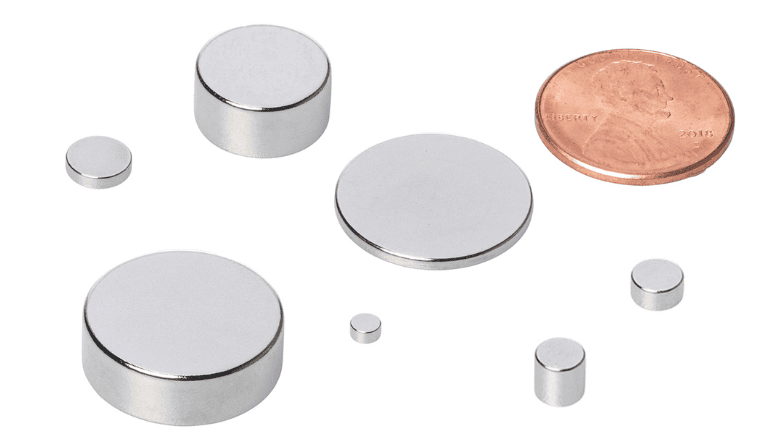
The demand for industrial neodymium magnet solutions has led manufacturers to design specialized coatings, grades, and shapes. Nickel-copper-nickel coatings provide resistance against corrosion, while epoxy coatings are used in humid or outdoor conditions. Custom-shaped magnets, like rings, blocks, or discs, are tailored to fit specific machinery and systems. Many companies also offer magnet assembly services, providing ready-to-use components that save time and improve system reliability.
To overcome temperature-related issues, engineers use high-grade neodymium magnets like N42SH or N52H, designed to maintain performance even at elevated temperatures. These advancements have opened new possibilities in areas such as electric vehicles and power generation systems.
Sustainability and Recycling Efforts
With increasing use, the recycling of neodymium magnets has become a growing focus. Extracting rare earth materials from discarded electronics reduces environmental impact and ensures a sustainable supply. Companies around the world are developing methods to recover neodymium without losing magnetic quality, supporting the global shift toward eco-friendly industrial practices.
Conclusion
In conclusion, industrial neodymium magnets have revolutionized the modern industrial landscape with their strength, efficiency, and reliability. They play a key role in everything from renewable energy to automation systems. As industries evolve, so do the solutions around neodymium magnets—making them safer, more sustainable, and more adaptable. Their contribution to innovation and technology continues to power the future of manufacturing and beyond.